Remember how search used to work?
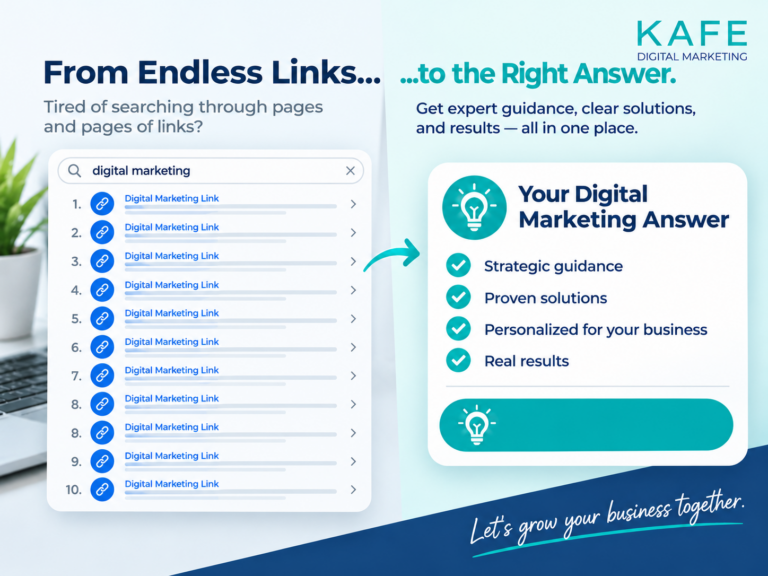
You typed a few words. Google gave you ten blue links. You clicked one, then another, then back again, until you found what you needed.
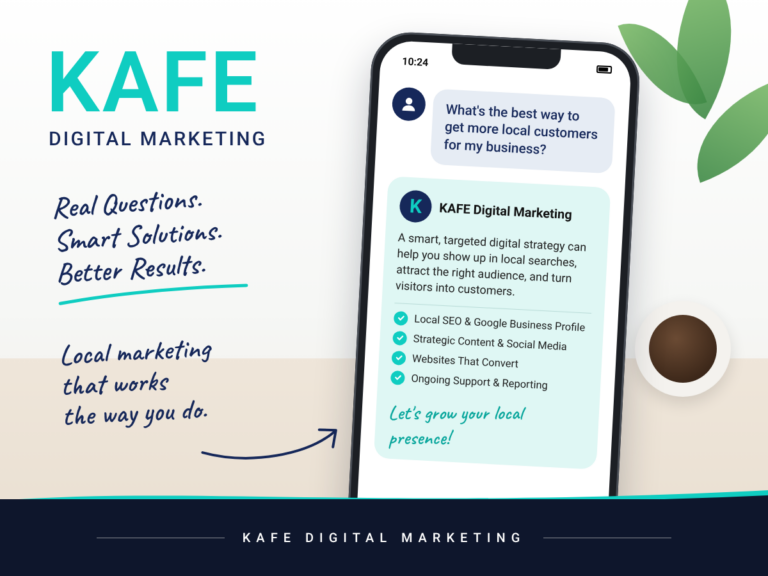
That page is disappearing. More and more often, Google now reads the web for you and hands back a single written answer. For your customers, that’s convenient. For your business, it changes how you get found.
This is a plain-English tour of what changed, what it means, and what to do about it. No jargon, I promise.
The new places Google answers questions
There are four AI surfaces worth knowing about.
- AI Overviews. The written summary that appears at the top of some search results. It pulls from several websites and links to a few of them.
- AI Mode. A separate, conversational search. People ask a question, get an answer, and keep asking follow-ups, like chatting with a well-read assistant. For local questions, it shows businesses with their profile details right inside the answer.
- Ask Maps. A new feature inside Google Maps, rolling out in the US and India. People type questions like “quiet coffee shop with outdoor seating near the library” and get AI-picked suggestions on a map.
- Gemini. Google’s AI assistant app. It can now show local businesses using Google Maps data, with photos, ratings, and details.
You don’t need to master each one. You just need to know they all draw from the same well: your website, your Google Business Profile, your reviews, and what others say about you online.
What “query fan-out” means (and why you should care)
Here’s the behind-the-scenes part.
When someone asks AI Mode a question, Google doesn’t run just one search. It breaks the question into many smaller searches and runs them all at once. Search experts call this “query fan-out.”
Say someone asks: “Who can redo my small bathroom in an older home without tearing out the original tile?”
Behind the scenes, Google might search for bathroom remodelers nearby, contractors who work on historic homes, tile restoration, reviews mentioning older houses, and more. Then it stitches the results into one answer.
Look at it this way: you’re no longer competing for one keyword. You’re competing to be the best answer to many small questions at once. The businesses that win are the ones with the clearest, most complete information about exactly what they do.
Fewer clicks, better leads
Some business owners panic when they hear this. “If Google answers the question, will anyone visit my website?”
It’s a fair worry. Some quick-answer searches will send fewer visitors. But there’s another side to it.
The people who do click through after reading an AI answer have already done their homework. They’ve seen a summary, compared options, and chosen you. Those visitors tend to be closer to calling, booking, or buying.
So don’t measure success by traffic alone. Watch calls, form fills, direction requests, and bookings. Those are the numbers that pay the bills.
What still works
The good news: the fundamentals didn’t go away. They got more important.
- Accurate business details everywhere. Your name, address, phone, and hours should match on your website, your Google Business Profile, and every directory. AI notices when they don’t.
- A complete Google Business Profile. Services, products, attributes, photos, and a real description. (Tuesday’s article walks through this step by step.)
- Pages that actually answer questions. One clear page per service. Plain sentences. An FAQ section built from what customers really ask you.
- Real reviews that describe real experiences. AI reads what customers wrote, not just the star count.
- A fast, mobile-friendly website. Still table stakes.
What to stop doing
On the other hand, some old habits now work against you.
- Keyword stuffing. Writing “best plumber Wilmington plumber near me plumbing Wilmington” reads badly to people and to AI.
- Thin pages written for robots. Ten nearly identical pages for ten nearby towns rarely help. One strong page that lists your service areas does more.
- Set-it-and-forget-it profiles. A profile you haven’t touched since 2022 tells AI you might not be active.
Your one-page checklist
This is a simple step. Work through it this month:
- Search your business name. Does everything on your profile look current?
- Ask Google a full-sentence question your best customer would ask. Do you appear?
- Check that your name, address, and phone match everywhere.
- Make sure every service has its own page or section on your website.
- Add an FAQ section with five real customer questions.
- Reply to your recent reviews.
- Start tracking calls and bookings, not just website visits.
The bottom line
Search is moving from “here are some links” to “here’s the answer.” That sounds intimidating, but it rewards the businesses that are clear, consistent, and genuinely helpful. That’s good news if you’re willing to do the basics well.
If you’d like help making your website and Google profile ready for AI search, KAFE Consulting does exactly that.
Book a call and we’ll look at where you stand.
The search page changed. Your job didn’t: be the clearest answer to your customer’s question.
Sources: