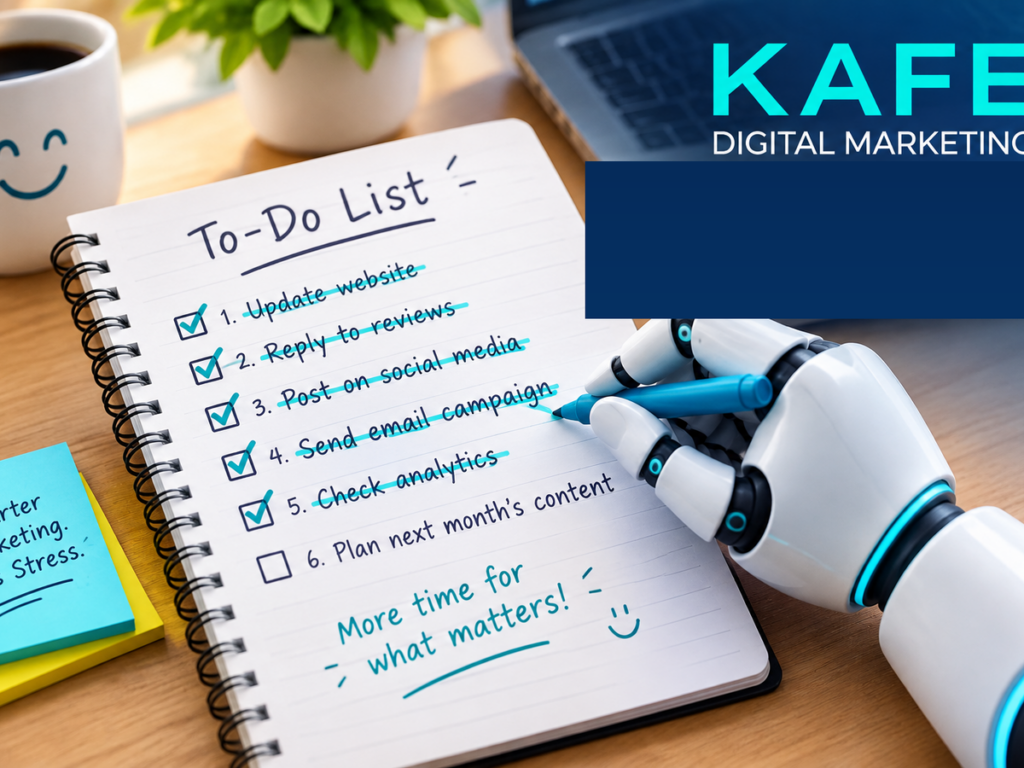
If the holidays show you anything, it’s where your time leaks.
The phone rings with the same questions. Leads pile up in your inbox. Proposals wait until Sunday night. Reviews go unanswered. And the new seasonal hire keeps asking how you do things, because none of it is written down.
This is the perfect time to notice those leaks, because it’s when they hurt most. Here are five tasks a custom AI assistant handles well for small businesses and nonprofits, with what each one takes to set up and what still needs a human.
1. Answering the same customer questions
What it does: A chatbot on your website, trained on your FAQs, prices, policies, and hours, answers common questions any time of day. “Do you deliver?” “How much is a consultation?” “Are you open Saturday?”
Time saved: Often hours a week of repeat emails and calls, especially in busy seasons.
Setup effort: Medium. You’ll gather your FAQs and policies, write clear instructions for tone and boundaries, then test it with real questions.
What still needs a human: Anything unusual, sensitive, or emotional. A good chatbot knows when to say “Let me connect you with someone” and hands off.
2. Sorting and logging new leads
What it does: When someone fills out a form or chats on your site, AI asks a few qualifying questions, figures out what they need, and logs the lead to a spreadsheet or CRM automatically.
Time saved: No more copying details from emails, and no lead falling through the cracks.
Setup effort: Medium to high. It needs a clear set of questions and a connection to wherever you track leads.
What still needs a human: The follow-up call. AI qualifies; you build the relationship.
This is exactly what our own chatbot does at KAFE. It sorts visitors by need, logs every lead automatically, and sends them to the right next step.
3. Drafting proposals and estimates
What it does: You choose the services and pricing, and AI drafts a branded proposal in minutes instead of hours.
Time saved: Often an hour or more per proposal.
Setup effort: Medium. It needs your price list, service descriptions, and a proposal template.
What still needs a human: Final review of scope and pricing. Always.
We built a Proposal and Estimate Builder for KAFE that does this, including bundled package pricing calculated automatically.
4. Drafting review replies in your voice
What it does: An assistant that knows your brand voice drafts personal replies to new reviews, including thoughtful responses to negative ones.
Time saved: A little time per reply, a lot of mental energy, and far more consistency.
Setup effort: Low. A saved assistant with your voice guidelines and a few sample replies can do this well.
What still needs a human: Reading and approving every reply before it posts.
5. Turning “how I do it” into SOPs
What it does: You talk through how you do a task (or record yourself doing it), and AI turns it into a clear, step-by-step standard operating procedure your team, a seasonal hire, or a virtual assistant can follow.
Time saved: Fewer interruptions, faster training, and less of the business living only in your head.
Setup effort: Low. This is one of the easiest wins in AI.
What still needs a human: Testing the SOP with the person who’ll use it and fixing the steps that don’t make sense.
At a glance
| Task | Setup effort | Best first step |
|---|---|---|
| Customer questions | Medium | Write down your top 20 questions and answers |
| Lead sorting | Medium to high | List the 3 to 5 questions you ask every new lead |
| Proposals | Medium | Gather your price list and best past proposal |
| Review replies | Low | Write a short voice guide and 3 sample replies |
| SOPs | Low | Record yourself doing one task you repeat weekly |
How to pick your first one
Look at it this way: the best first project is the one that annoys you most and is easiest to define.
Ask yourself three questions:
- Which task do I do over and over, the same way?
- Which one costs me the most time or the most leads?
- Which one could I explain clearly to a new employee?
The task that scores well on all three is your starting point. For most small businesses, that’s either SOPs (easiest) or customer questions (biggest payoff).
On the other hand, resist the urge to tackle all five at once. One well-built assistant that actually gets used beats five half-finished experiments.
The bottom line
Custom AI isn’t about replacing people. It’s about taking the repetitive work off your plate so you and your team can focus on customers.
Not sure which task to start with? Book a call. As a certified AI consultant, I’ll help you pick the one with the best payoff, set it up properly, and train your team to use it.
This busy season, let something else answer the same question for the twentieth time.