“Hustle harder.”
“Winners want it more.”
“If you're not grinding, you're not growing.”
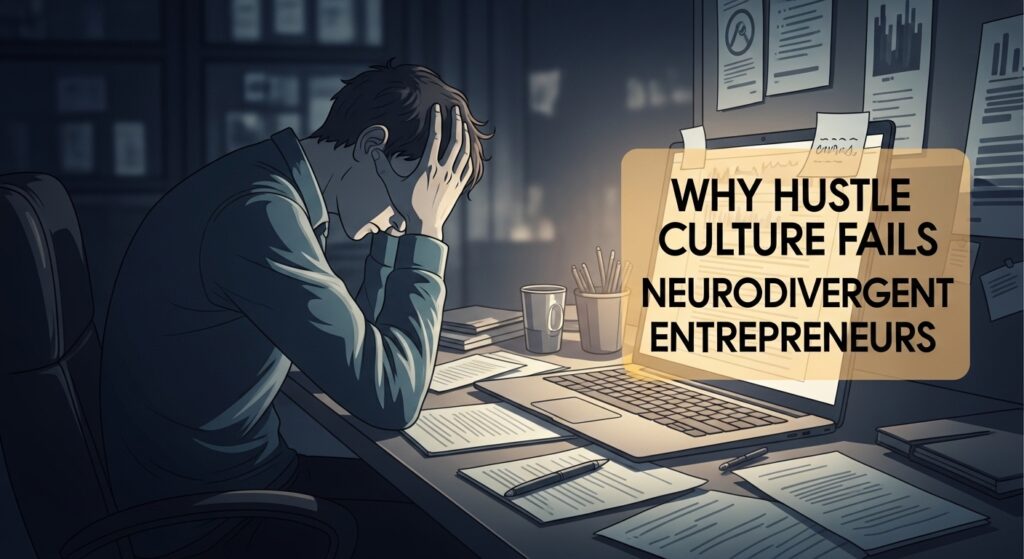
For a lot of neurodivergent entrepreneurs, that kind of messaging doesn't inspire—it triggers. Not because you're not ambitious, but because hustle culture is built on assumptions that don't match how your brain and nervous system work.
The Hidden Assumptions of Hustle Culture
Hustle culture quietly assumes:
- Your energy is relatively stable day to day.
- You can push through sensory overload and still perform.
- Your focus can be summoned on demand if you “care enough.”
- Rest is a reward after you've done enough.
But for many ADHD, autistic, and otherwise neurodivergent entrepreneurs:
- Energy can swing wildly.
- Sensory and information overload shut things down fast.
- Focus arrives in bursts, not on command.
- Rest is a requirement for basic functioning—not a luxury.
When you measure yourself against hustle rules, you will always feel behind.
The Adrenaline Problem
Hustle culture loves adrenaline: big pushes, late nights, sprint after sprint.
Neurodivergent folks often can sprint—sometimes better than anyone in the room. The problem is what happens afterward:
- Two days of intense focus → three days of recovery.
- A launch sprint → a month of avoidance.
- A big burst of visibility → complete disappearance.
From the outside, it looks like inconsistency. From the inside, it's nervous system crash.
A Capacity-Based Alternative
Instead of “How much can I push?” try:
“What can I sustainably maintain on a low-energy day?”
That's the question a lot of my work at KAFE comes back to.
A capacity-based model prioritizes:
- Predictability over intensity.
- Visibility you don't have to reinvent daily (Google Business Profile, evergreen content).
- Systems that work on 30–50% energy, not 110%.
What Capacity-Friendly Growth Looks Like
1. Fewer Platforms, More Structure
Instead of posting everywhere:
- Choose one anchor channel for visibility (often Google Business Profile for local businesses).
- Use one or two social platforms that feel most natural.
- Let systems (not guilt) decide where content lives.
2. Defined Offers, Not Custom Everything
Custom work burns cognitive fuel. Defined offers protect it.
- 2–3 packages
- Clear scope
- Clear pricing
- Clear process
Your brain doesn't have to reinvent the wheel every sales call.
3. Automation as a Disability Accommodation
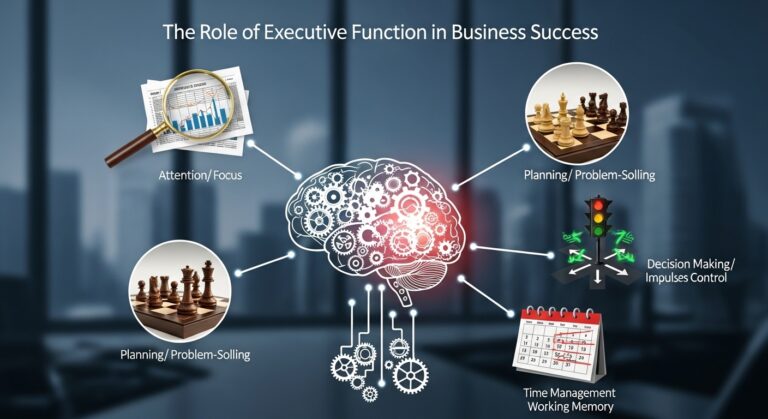
Automation isn't just “fancy tech.” For many neurodivergent entrepreneurs, it functions like a mobility aid for your executive function.
- Automated follow-ups for inquiries.
- Review request emails that send themselves.
- Calendar links instead of back-and-forth scheduling.
It's not cheating. It's making your business accessible to the way you think.
A Story You Might Recognize
One of my clients, an ADHD entrepreneur, kept trying to “do it like the big names”:
- Launches with daily lives.
- Posting everywhere.
- Pulling late nights to “keep up.”
She was talented—but exhausted and inconsistent. Instead of pushing harder, we:
- Built a simple Google Business Profile presence.
- Simplified her offers into three clear packages.
- Created a repeatable weekly schedule for content and client delivery.
- Used AI to help shape her ideas into posts on low-energy days.
Within a few months, she was working fewer hours, closing more aligned clients, and feeling less like she was always “failing” invisible hustle rules.
You're Not Failing Hustle Culture—It's Failing You
Hustle culture was never designed for:
- People with variable capacity.
- Parents doing bedtime and business plans in the same night.
- Veterans managing physical or mental health realities.
- Anyone whose nervous system has different needs.
You don't need a stronger hustle. You need a system that respects your capacity.