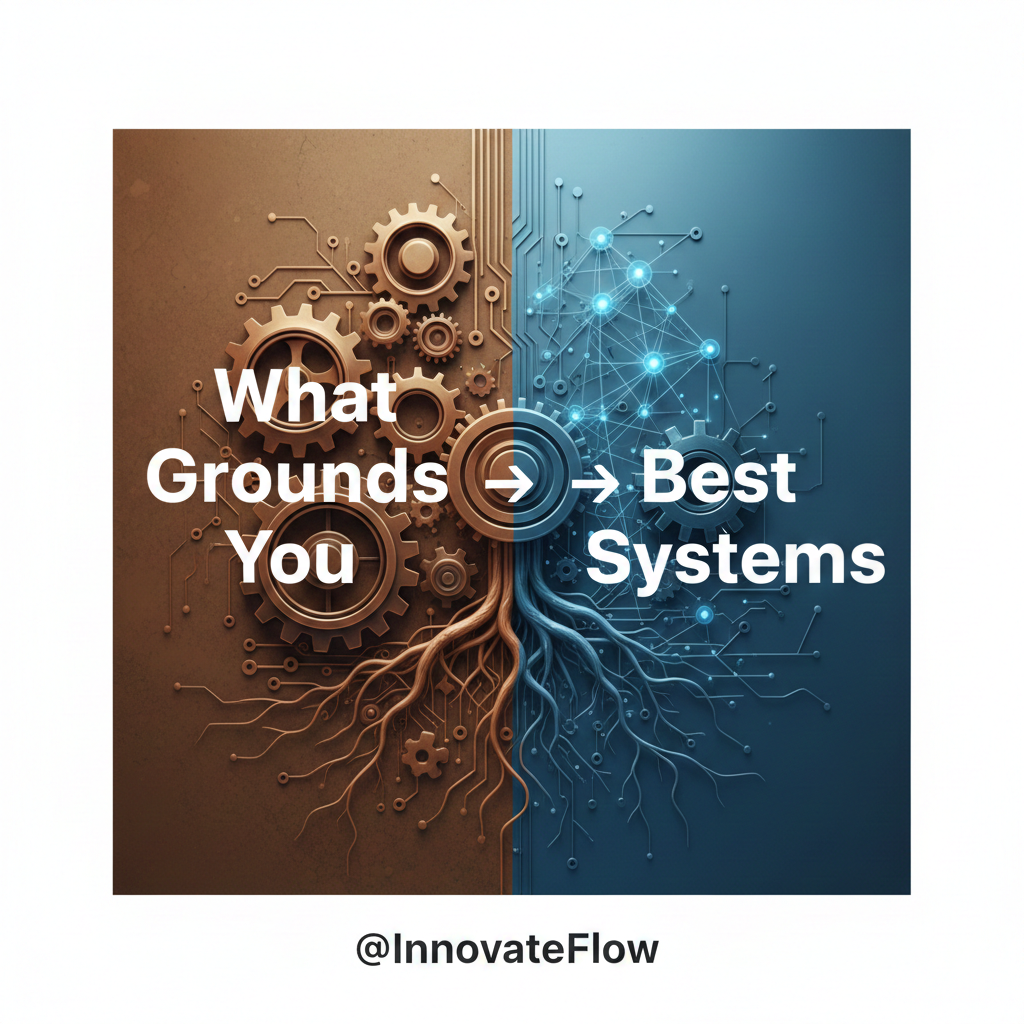
“I’m paying close attention to what’s helping me stay grounded right now—and what’s not. That’s always where the best systems come from.”
There’s a tendency in business to design systems from theory: what a template says you “should” do, what a guru recommends, what someone else’s successful setup looks like. But the most sustainable systems are built from observation—watching your real life and asking, “What actually helps?”
In an international move, for example, you might notice that:
- A 10-minute daily planning check-in helps you feel oriented, even when everything around you is new.
- A weekly review of client projects keeps you from waking up at 3 a.m. worrying about what you forgot.
- A simple “shutdown ritual” at the end of your workday signals to your brain that it’s okay to rest.
Those patterns aren’t accidents. They’re data.
Instead of forcing yourself into someone else’s system, you can:
- Notice what grounds you.
Pay attention for a week: what small habits actually calm your mind and help you feel capable? - Name what those habits have in common.
Are they visual? Written? Time-based? Do they happen at the start of the day, the end, or in the middle? - Build systems around those anchors.
If checklists help, turn more of your recurring tasks into checklists. If time blocks help, group similar tasks together. If visual cues help, make important things visible.
AI can help you turn these observations into structure. You can describe what grounds you, and then ask it to suggest routines, checklists, or workflows that support those patterns.
The best systems are not theoretical. They’re rooted in your actual nervous system, your actual responsibilities, and your actual life. When you build from what genuinely steadies you, your systems become more usable—and more humane.