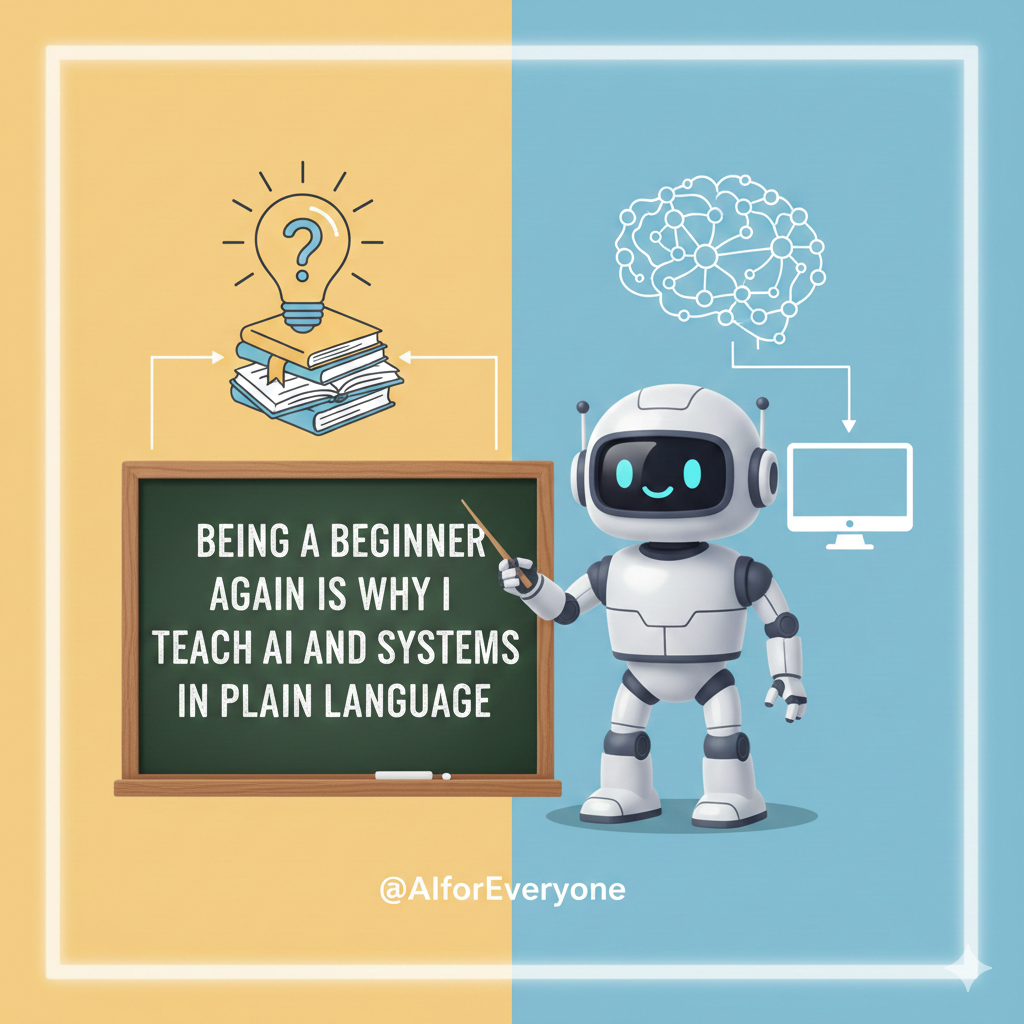
Being a beginner again is humbling. It can also be one of the most valuable experiences a leader has.
When you’re used to being competent—maybe even the person others come to for help—suddenly not knowing what to say, how to navigate, or which word to use can feel unsettling. But it also cracks open your empathy. You remember exactly what it feels like to be on the other side of your own expertise.
That’s one of the reasons you teach AI and systems in plain language. Nobody needs more pressure while they’re learning. They need:
- Clear explanations without jargon.
- Step-by-step guidance that doesn’t assume they already know the basics.
- Encouragement that honors the fact that learning happens in layers, not all at once.
For small businesses, nonprofits, and educators, this is especially important. Many people are learning AI and new systems on top of full workloads, caregiving, and community responsibilities. They’re not failing because they’re “not tech-savvy.” They’re overwhelmed because most tools and trainings aren’t built for real-life capacity.
A beginner-friendly, plain-language approach to AI and systems might look like:
- Showing real examples from their context (a nonprofit intake form, a local business Google review, a busy educator’s planning notes).
- Using simple prompts that they can copy, paste, and customize, rather than expecting them to invent perfect instructions.
- Normalizing mistakes and misfires as part of the process: “If this output doesn’t make sense, here’s how to ask again more clearly.”
Being a beginner again isn’t just something to endure. It’s a teacher. It reminds you why you build systems and trainings that are emotionally safe, structurally clear, and respectful of people’s limited bandwidth.
When you’ve personally felt the discomfort of not knowing, you’re far less likely to design systems that punish others for being new. That’s a gift to everyone who will ever learn from or work with you.