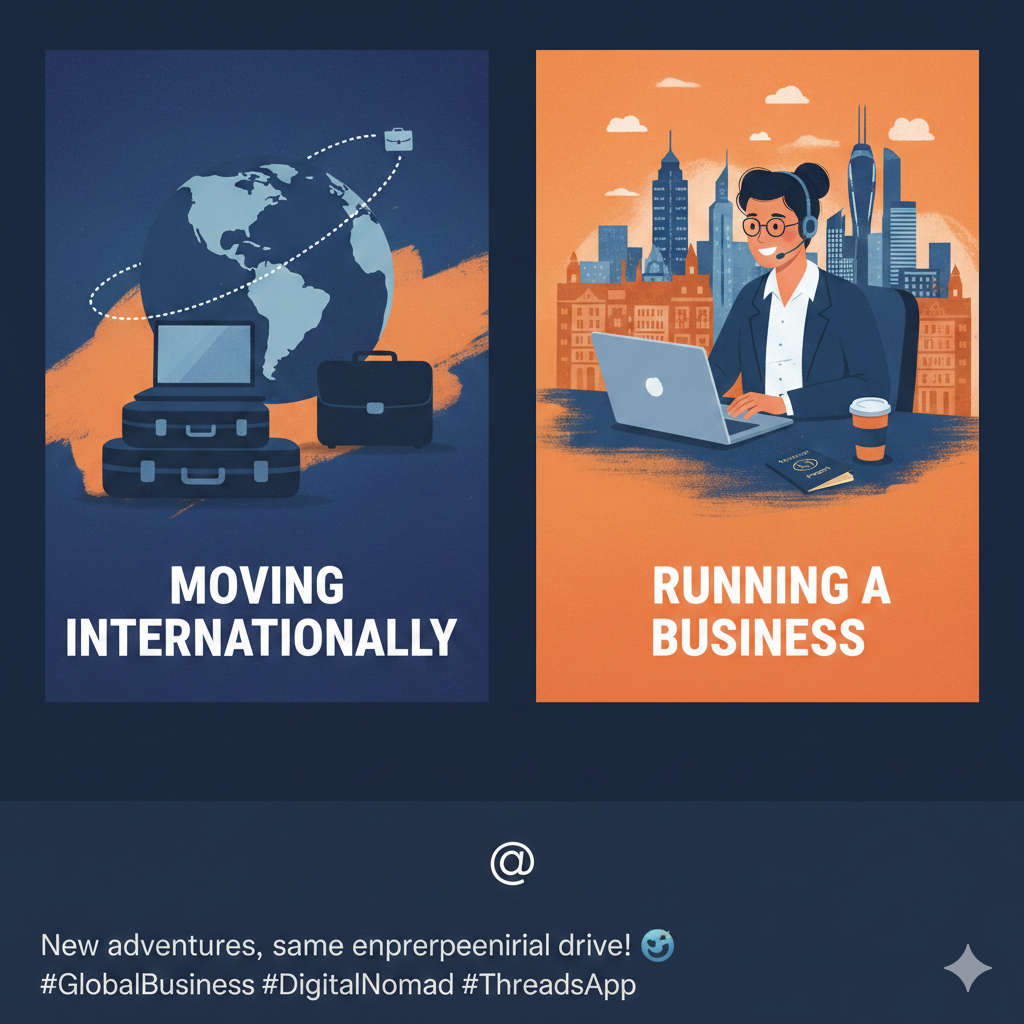
Moving internationally while running a business has reinforced something you likely already suspect: good systems don’t panic when life changes. They flex, support, and steady you while everything else is in motion.
Right now, your days might include learning new rhythms, a new language, and new customs—while still showing up for clients. That only works because your business isn’t being held together by memory and adrenaline alone. It’s supported by systems that are simple, documented, and designed to reduce decision fatigue.
Many small business owners and nonprofit leaders unintentionally build businesses that depend on them being at “full power” all the time. As long as you’re in the same city, same routine, same energy, it sort of works. But as soon as life changes—health shifts, caregiving, moving internationally—everything starts to wobble.
Capacity-first systems ask a different question:
“If my life changed tomorrow, could my business still feel steady?”
That’s not a crisis question. It’s a design question.
Here are a few places to start if you want systems that won’t panic during transition:
- Document the basics before you need them.
Write down how you onboard clients, how you invoice, where you store key files, and how you track tasks. Even a simple shared document can prevent chaos when you’re jet-lagged, in a new time zone, or onboarding help. - Use AI as a clarity tool, not a crutch.
When your brain is full of logistics (visas, housing, schools, language), AI can help by turning bullet points into emails, summarizing client calls, or drafting checklists. The ideas still come from you; the tool just shapes them into something usable. - Simplify your “front door.”
Make sure your website and Google Business Profile clearly explain what you do and how to reach you, without needing constant social media output. That way, your visibility doesn’t disappear just because your bandwidth temporarily shrinks. - Design for lower energy, not just ideal days.
If your systems only work when you’re at 100%, they’re not systems—they’re wishful thinking. Build processes that you can follow even when you’re tired, overwhelmed, or still figuring out where the grocery store is.
Transition isn’t a failure state. It’s a design state. It reveals which structures actually support you and which ones depend on everything going smoothly.
If you’re in a season of change—moving, caregiving, navigating health shifts—you’re not behind. You’re being given information about what your business needs in order to truly be sustainable. You don’t have to fix everything at once, but you can choose one small system this week to make more resilient.