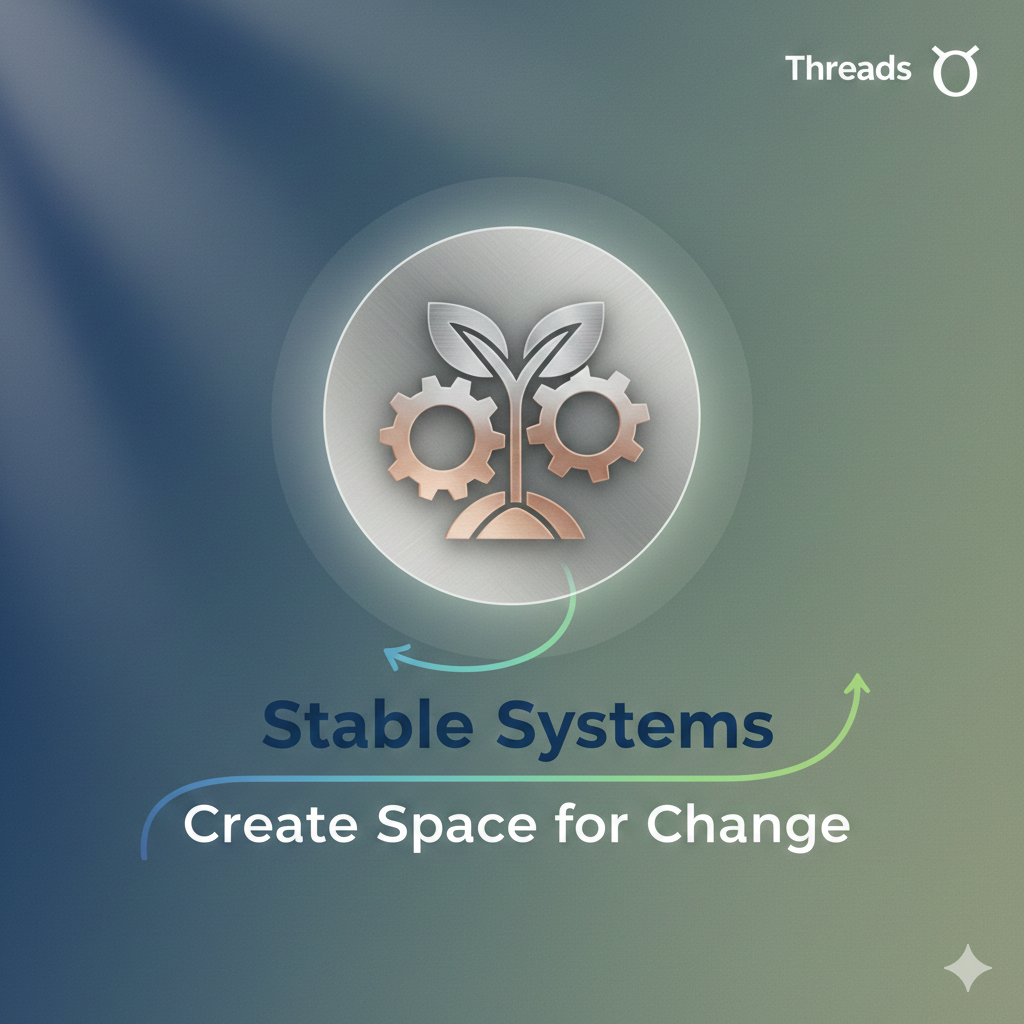
“Stable systems create space for change.” It sounds simple, but it’s easy to miss when you’re in the middle of a transition.
When your operations are steady—your client processes, your communication rhythms, your core tools—you don’t have to spend as much energy just keeping things from falling apart. That freed-up energy becomes your margin: the space you use to learn a new language, settle into a new home, support family, or just feel your feelings.
Stability doesn’t mean rigidity. It means:
- Clients know what to expect when they work with you.
- You know where to find key information, even when you’re tired.
- Important tasks don’t depend on you remembering them at the last minute.
You can build this kind of stability by:
- Standardizing repeatable processes.
Onboarding, invoicing, project delivery—capture your usual steps and turn them into repeatable checklists. - Creating simple “safety nets.”
Use calendar reminders, task tools, or AI-generated checklists so critical tasks don’t slip away when your schedule changes. - Keeping core tools constant.
When everything else is changing, resist the urge to switch platforms. Let your existing tools stay familiar while your environment shifts.
AI can help keep these systems stable without demanding more of you. It can summarize your processes, build draft SOPs, and propose reminders or routines based on the way you already work.
Change will always require energy. Stable systems don’t remove that cost—but they make sure you’re not paying extra in chaos, confusion, and constant rework. They give you a place to stand while everything else moves.